

Daily Vocabulary International Newspapers aur Publications se Seekho
Wordpandit ke Global Vocabulary Hub ke Saath Apni Vocabulary Expand Karo
Wordpandit par, hum aapko ek truly global vocabulary develop karne me madad karte hain, jo duniya ke sabse respected international publications se li gayi hoti hai. Yeh section aapko naye words se introduce karne ke liye design kiya gaya hai jo global conversations aur trends ko define karte hain.
Global Sources ka Power
Aapko globally sochne aur communicate karne me madad dene ke liye, hum vocabulary curate karte hain world ke top international sources se, jaise:
- The New York Times
- The Washington Post
- BBC
- The Guardian
- The Economist
- Scientific American
- Psychology Today
- Aur bhi bahut saare...
Globally Socho, Competitively Seekho
Hamare daily updates se aap international publications ke naye words seekhoge jo global news aur developments se jude hote hain. Isse aapki vocabulary current bhi rahegi aur globally relevant bhi.
Apni Global Soch Ko Expand Karo
Agar aap international exams ki tayari kar rahe ho, global business communication me excel karna chahte ho, ya sirf apni language skills improve karna chahte ho, toh Wordpandit aapko global level pe grow karne ke liye best resources provide karta hai.
Smart Learning, Global Reach
Hamari learning methodology me global examples, memory aids, aur interactive activities shamil hain, jo naye words ko effectively yaad karne aur real-world me use karne me madad karti hain.
Aaj Hi Apni Global Vocabulary Journey Shuru Karo!

Wordpandit Kyun Choose Karein?
Practical Learning: Aise words seekho jo real-world reading aur communication me aapko sach me kaam aayenge, taaki aapki comprehension aur bolne ki skills improve ho.
Diverse Content: Current affairs se lekar scientific breakthroughs tak, hamare different sources aapko multiple domains ki vocabulary seekhne ka moka dete hain.
Effortless Integration: Wordpandit ko apni daily routine ka part banao. Sirf kuch minute har din dene se aapki vocabulary time ke saath kaafi improve ho sakti hai.
Vocabulary Mastery Tak Ka Aapka Safar
- Regularly hamare Daily Vocabulary section ko visit karo
- Naye words explore karo aur unka context me use samjho
- In words ko apni writing aur bolne ki practice me use karne ki koshish karo
- Jaise-jaise aapke words badhte hain, apni progress ko track karo
Aaj Hi Apni Vocabulary Journey Shuru Karo!
Wordpandit ke saath vocabulary improve karna start karo. Roz thoda effort dalne se aap ek strong vocabulary develop kar sakte ho jo academic, professional, aur personal life me kaafi kaam aayegi.
Yaad rakho, ek naya shabd roz seekhna linguistic limitations ko door karne ka best tareeka hai! Wordpandit ko apni daily learning journey ka sathi banao aur vocabulary excellence ki taraf badho!
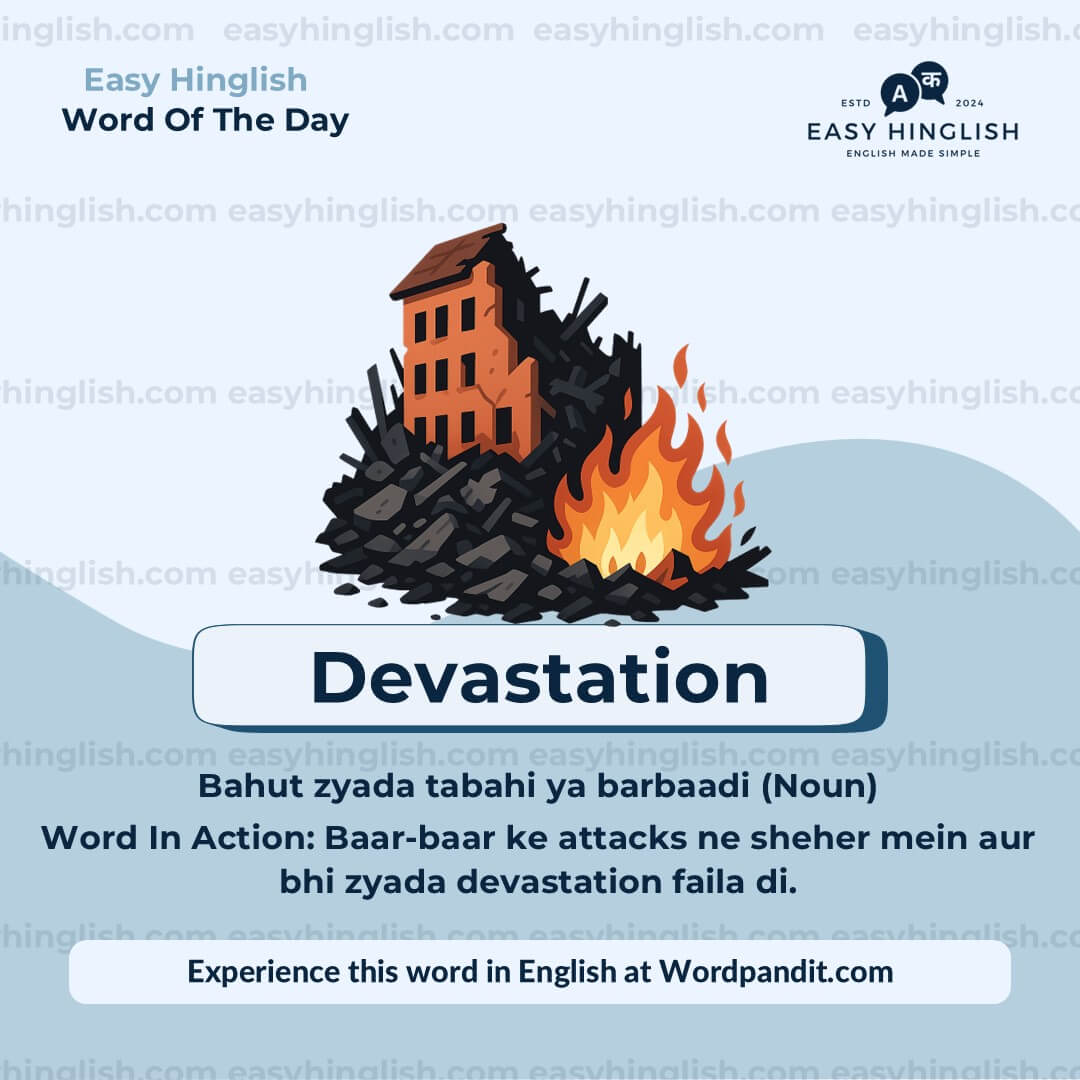
WORD-1: Devastation
Sandarbh (Context):
"The argument is that this would isolate Hamas, further break its command and control structures. To the extent such structures still exist, it’s really quite hard to see how more devastation would degrade them." - The New York Times
Vyakhya (Explanatory Paragraph):
“Devastation” ka matlab hota hai kisi cheez ka bahut hi zyada tabah ho jaana — chahe woh ek city ho, nature ho, ya kisi ka emotion. Jab koi jang ya natural disaster hota hai, toh uske baad jo bacha-kucha nahi hota, us halat ko “devastation” kehte hain. Yeh sirf physical destruction nahi, balki emotional aur mental impact bhi dikhata hai. Upar wale context mein, yeh word yeh batane ke liye use hua hai ki aur zyada destruction ka koi matlab nahi banta, kyunki shayad kuch bacha hi nahi hai tabah karne ko.
Arth (Meaning): Bahut zyada tabahi ya barbaadi (Noun)
Uccharan (Pronunciation): dev-uh-STAY-shun
Kathinai Star (Difficulty Level): ⭐⭐ Basic to Intermediate
Utpatti (Etymology): Latin shabd “devastatio” se aaya hai, jiska matlab hota hai “lay waste” ya “destroy”.
Prashant Sir Ke Tathya (Prashant Sir's Notes):
Yeh word aksar news reports mein milta hai — jaise war, natural disasters, ya bade accidents ke samay. Ek impactful noun hai jo damage ka scale aur gahrayee dono dikhata hai. Kabhi-kabhi ise metaphorically bhi use kiya jata hai, jaise emotional devastation.
Samanarthi & Vipritarthi (Synonyms & Antonyms):
Samanarthi (Synonyms): destruction, ruin, havoc, demolition, wreckage
Vipritarthi (Antonyms): restoration, repair, reconstruction, revival, healing
Udaharan (Usage Examples):
- Tufaan ne coastal towns mein devastation chhod diya.
- Financial crisis ke baad duniya bhar mein economic devastation mehsoos hua.
- Warzone ki tasveerein city par aayi devastation ko dikhati hain.
- News sunte hi uske chehre par devastation clearly nazar aa rahi thi.
Sanskritik Sandarbh (Cultural Reference):
"Hiroshima aur Nagasaki ka devastation history ka ek turning point tha." - World War II references
Sochiye (Think About It):
Kya kisi bhi tareeke ki devastation ko kabhi peace ya security ke liye justify kiya ja sakta hai?
Chhoti Kriya (Quick Activity):
"Devastation" par do sentences likhiye — ek literal (jaise kisi building ka collapse) aur ek metaphorical (jaise kisi ka heartbreak).
Yaad Karne Ka Tarika (Memory Tip):
“Devastation” ko yaad rakhne ke liye sochiye: "de-VAST-ation" — matlab kuch ‘vast’ cheez ko totally barbaad kar dena.
Vastavik Jeevan Me Upyog (Real-World Application):
“Devastation” journalism, climate change reports, aur emergency relief appeals mein commonly use hota hai. Iska sahi usage aapko global issues ko samajhne mein help karega.
WORD-2: Pursuant
Sandarbh (Context):
"The United States is not maintaining these actions pursuant to the safeguards / emergency action provision in Article XIX of the GATT (General Agreement on Trade and Tariffs) 1994 and the Agreement on Safeguards." - Financial Express
Vyakhya (Explanatory Paragraph):
“Pursuant” ek formal aur legal shabd hai jo generally laws, policies, ya agreements ke context mein use hota hai. Iska matlab hota hai “ke anuroop” ya “ke anusaar.” Jab bhi kisi action ko kisi rule, contract ya regulation ke tahat liya jata hai, tab yeh word aata hai. Upar wale example mein, U.S. ki actions kisi trade agreement ke specific article ke anusaar nahi li gayi — yeh baat dikhane ke liye “pursuant” use hua hai.
Arth (Meaning): Ke anusaar ya ke tahat (Preposition/Adjective - formal)
Uccharan (Pronunciation): pur-SOO-uhnt
Kathinai Star (Difficulty Level): ⭐⭐⭐ Intermediate to Advanced
Utpatti (Etymology): Anglo-French “pursuant” se aaya hai, jo Old French “poursuivre” se nikla hai — iska matlab hota hai “to pursue” ya “peecha karna.”
Prashant Sir Ke Tathya (Prashant Sir's Notes):
Yeh ek typical formal/legal word hai jo kai baar students ignore kar dete hain ya galat samajhte hain. Iska usage hamesha kisi legal document ya official rule se judta hai. Dhyan rahe — yeh hamesha “to” ke saath aata hai: “pursuant to Article IX.”
Samanarthi & Vipritarthi (Synonyms & Antonyms):
Samanarthi (Synonyms): in accordance with, as per, according to, compliant with
Vipritarthi (Antonyms): contrary to, against, violating
Udaharan (Usage Examples):
- Court ke order ke pursuant, company ne saare marketing operations band kar diye.
- Yeh naye taxes fiscal reform act ke pursuant introduce kiye gaye.
- Aapke request ke pursuant, necessary documents attach kar diye gaye hain.
- Policy ko recent legal review ke pursuant badla gaya hai.
Sanskritik Sandarbh (Cultural Reference):
"Pursuant to the Freedom of Information Act, this document is made publicly available." - U.S. government aur legal documents mein common usage.
Sochiye (Think About It):
Legal aur government documents mein simple words jaise “according to” ki jagah “pursuant” jaise formal words ka use kyu hota hai?
Chhoti Kriya (Quick Activity):
Is sentence ko “pursuant” ke saath likhiye: "As per the school policy, students must wear uniforms." → Your answer: ___________________________
Yaad Karne Ka Tarika (Memory Tip):
Sochiye “pursuant” ka matlab hai “pursuing a rule” — agar koi kaam kisi rule ke tahat kiya gaya ho, to woh rule ka peecha kar raha hai.
Vastavik Jeevan Me Upyog (Real-World Application):
Legal contracts, government notices, aur academic research papers mein aap “pursuant to” ka usage zarur dekhenge. Iska matlab samajhna aapko formal documents acche se interpret karne mein madad karega.
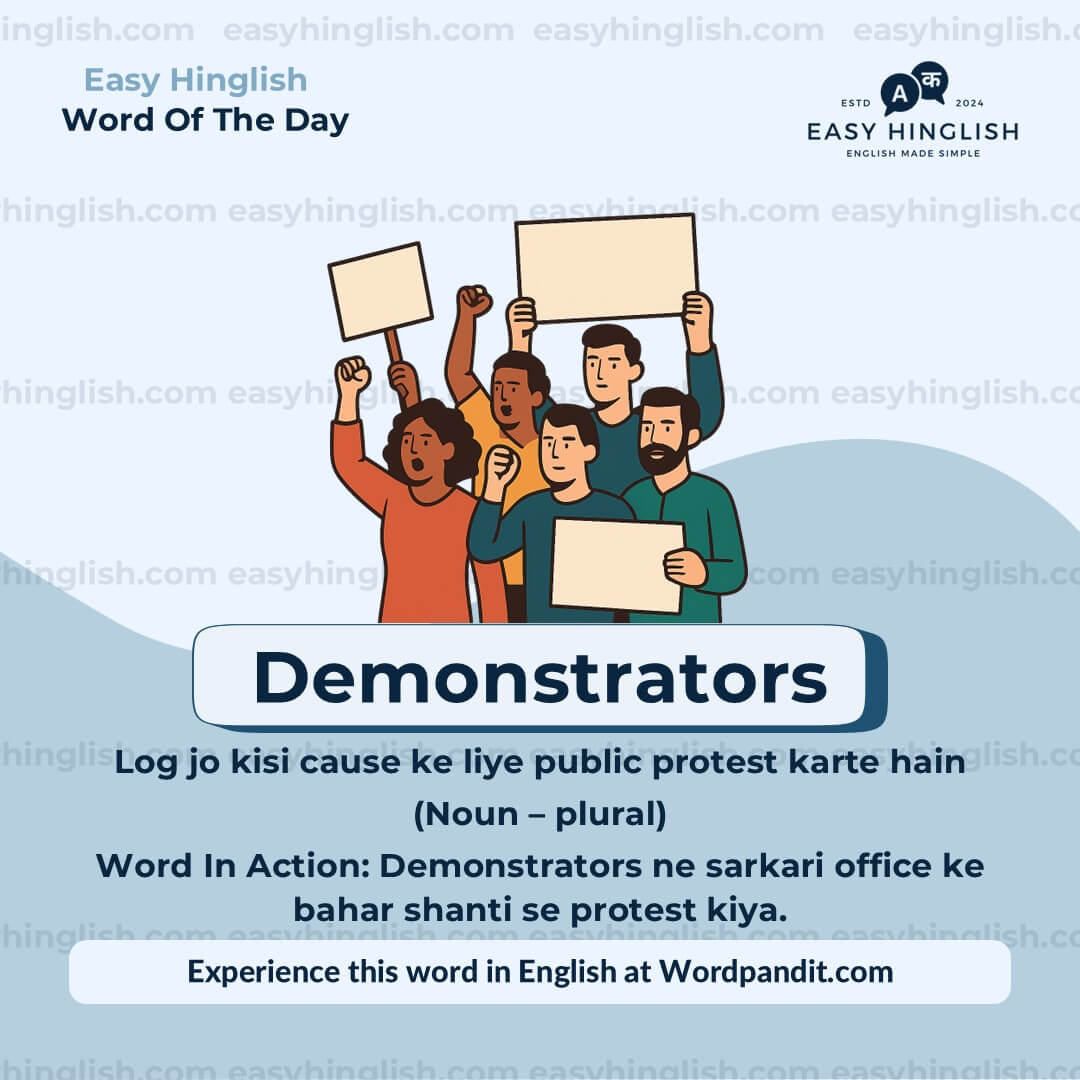
WORD-3: Demonstrators
Sandarbh (Context):
"Protests first broke out on 6 June, with confrontations between demonstrators and federal agents in the streets, before spreading more widely and at times turning violent." - BBC
Vyakhya (Explanatory Paragraph):
“Demonstrators” un logon ko bola jata hai jo public mein protest ya march mein hissa lete hain — usually kisi political, social ya economic mudde par apna opinion express karne ke liye. Yeh log banners leke nikalte hain, slogans lagate hain, ya symbolic acts karte hain taaki unki baat suni jaaye. Yeh shabd news reports mein aksar aata hai jab log apne protest ka adhikar use karte hain — chahe peaceful ho ya kabhi-kabhi violent ho jaaye, jaise upar ke context mein likha hai.
Arth (Meaning): Log jo kisi cause ke liye public protest karte hain (Noun – plural)
Uccharan (Pronunciation): DEM-un-stray-turz
Kathinai Star (Difficulty Level): ⭐⭐ Basic to Intermediate
Utpatti (Etymology): Latin shabd “dēmonstrāre” se aaya hai jiska matlab hota hai “dikhana ya pradarshit karna.”
Prashant Sir Ke Tathya (Prashant Sir's Notes):
“Demonstrators” ek neutral aur respectful shabd hai protest mein hissa lene wale logon ke liye. Dhyan rahe — yeh “demonstration” (event) aur “to demonstrate” (verb) se alag hai. Iska tone context pe depend karta hai — kabhi peaceful protesters ke liye, kabhi zyada aggressive groups ke liye.
Samanarthi & Vipritarthi (Synonyms & Antonyms):
Samanarthi (Synonyms): protesters, marchers, activists, picketers, dissidents
Vipritarthi (Antonyms): supporters (status quo ke), bystanders, nonparticipants
Udaharan (Usage Examples):
- Hazaron demonstrators ne parliament ke bahar reform ki demand ke liye march kiya.
- Police ko demonstrators ki crowd control ke liye tainat kiya gaya.
- Kuch demonstrators ne placards uthaye hue the, kuch megaphone se slogans chilla rahe the.
- Fair wages ke support mein demonstrators ne sadak block kar di.
Sanskritik Sandarbh (Cultural Reference):
"Tiananmen Square ke 1989 ke demonstrators pure duniya mein resistance ke symbol ban gaye." - Ek historical protest ka reference
Sochiye (Think About It):
Public jagah mein protest karte waqt demonstrators ki kya zimmedariyan hoti hain?
Chhoti Kriya (Quick Activity):
Neeche diye gaye causes se suitable slogans match kijiye. Example: Climate Change → "There is no Planet B!"
Yaad Karne Ka Tarika (Memory Tip):
“Demonstrators” yaad rakhne ke liye sochiye: yeh woh log hain jo apne beliefs ko publicly *demonstrate* karte hain.
Vastavik Jeevan Me Upyog (Real-World Application):
“Demonstrators” shabd aapko news, civic discussions aur social movements mein samajhne mein madad karta hai, jahan public expression aur activism ki central role hoti hai.
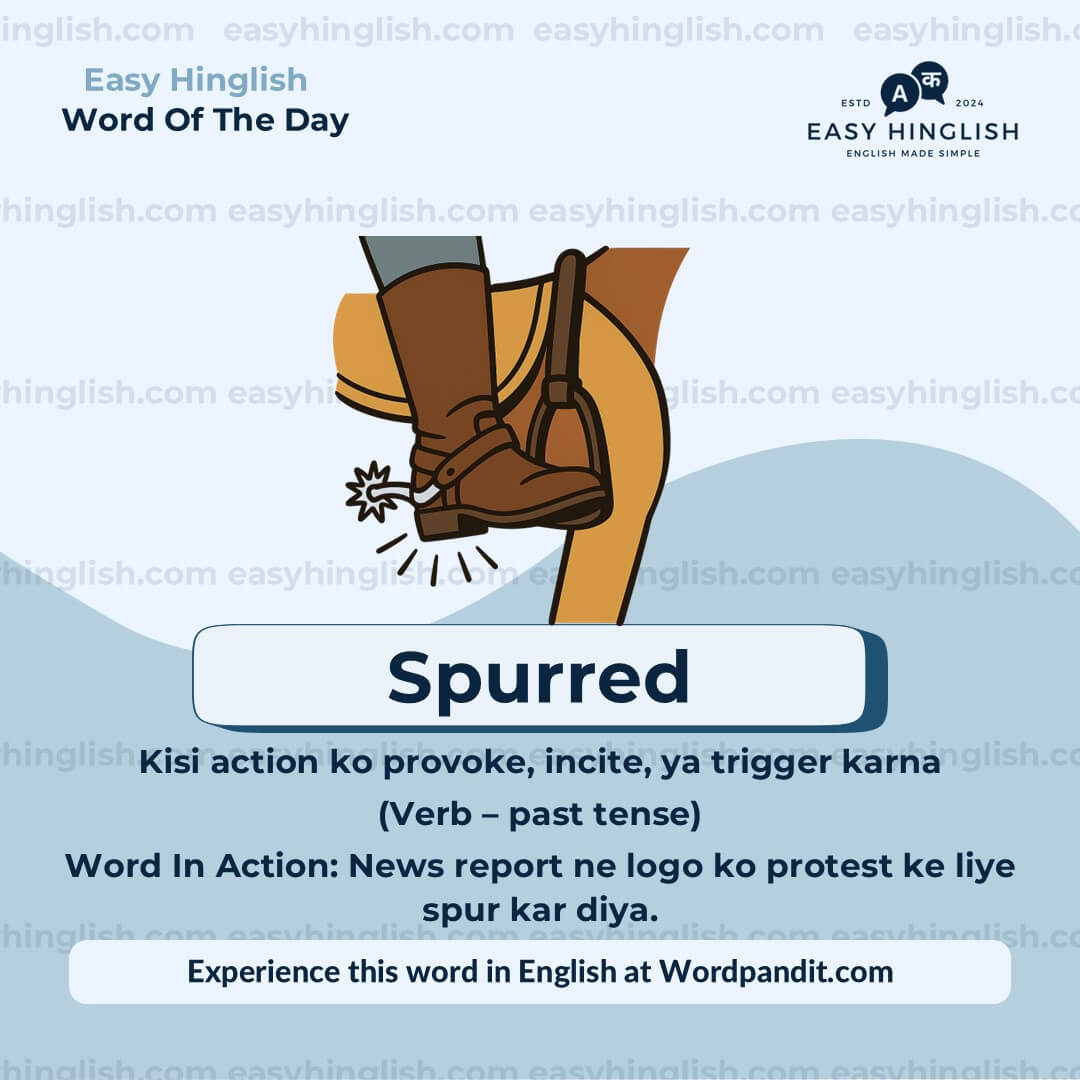
WORD-4: Spurred
Sandarbh (Context):
"In response, protests have spurred in all corners of the country - including in major cities like New York, Dallas, Washington and Boston." - BBC
Vyakhya (Explanatory Paragraph):
“Spurred” ka matlab hota hai kisi reaction, movement, ya development ko trigger karna ya tezi se badhava dena. Ye shabd “spur” naam ke ek pointed device se aaya hai jo ghode ko chalane ke liye use hoti thi. Aaj ke context mein iska arth hota hai kisi cheez ko action lene par majboor karna. Upar wale sentence mein, kuch events ne nationwide protests ko spur (provoke) kiya — yaani ki woh protests un events ke kaaran uthe.
Arth (Meaning): Kisi action ko provoke, incite, ya trigger karna (Verb – past tense)
Uccharan (Pronunciation): spurred (rhymes with “word”)
Kathinai Star (Difficulty Level): ⭐⭐ Basic to Intermediate
Utpatti (Etymology): Old English “spura” se aaya hai, jo Middle Low German “spore” se related hai — ek aisa tool jisse ghoda aage badhta hai.
Prashant Sir Ke Tathya (Prashant Sir's Notes):
Yeh verb causation dikhane ke liye kaafi useful hai, especially headlines aur analysis mein. “Spur” aur “spurred” dono forms yaad rakhna important hai. Metaphorical usage yaad rakho — isme asli ghoda nahi hota!
Samanarthi & Vipritarthi (Synonyms & Antonyms):
Samanarthi (Synonyms): triggered, prompted, provoked, encouraged, incited
Vipritarthi (Antonyms): hindered, discouraged, obstructed, restrained
Udaharan (Usage Examples):
- Uski success ne uske dost ko bhi hard work karne ke liye spurred kiya.
- Economic crisis ne government ko kai reforms lane ke liye spurred kiya.
- Ek viral video ne social media par outrage spurred kar diya.
- Nayi technology ne humare jeevan ke tareeke ko spurred karke badal diya hai.
Sanskritik Sandarbh (Cultural Reference):
"Rosa Parks ki arrest ne Montgomery Bus Boycott ko spurred kiya, jo civil rights movement ka ek important hissa bana." - Historical reference
Sochiye (Think About It):
Aapki zindagi mein kaunse events ya experiences ne aapko kisi naye action lene ke liye spurred kiya hai?
Chhoti Kriya (Quick Activity):
Fill in the blank: "The shocking news report ___________ a wave of protests across the city."
Yaad Karne Ka Tarika (Memory Tip):
Ek cowboy ko sochiye jo ghode ko chalane ke liye spur use karta hai — waise hi ek bada event logon ko action lene ke liye “spur” karta hai.
Vastavik Jeevan Me Upyog (Real-World Application):
“Spurred” aapko journalism, motivational talks, aur political analysis mein sunne ko milega — jab bhi ek action kisi cause ke response mein liya gaya ho.
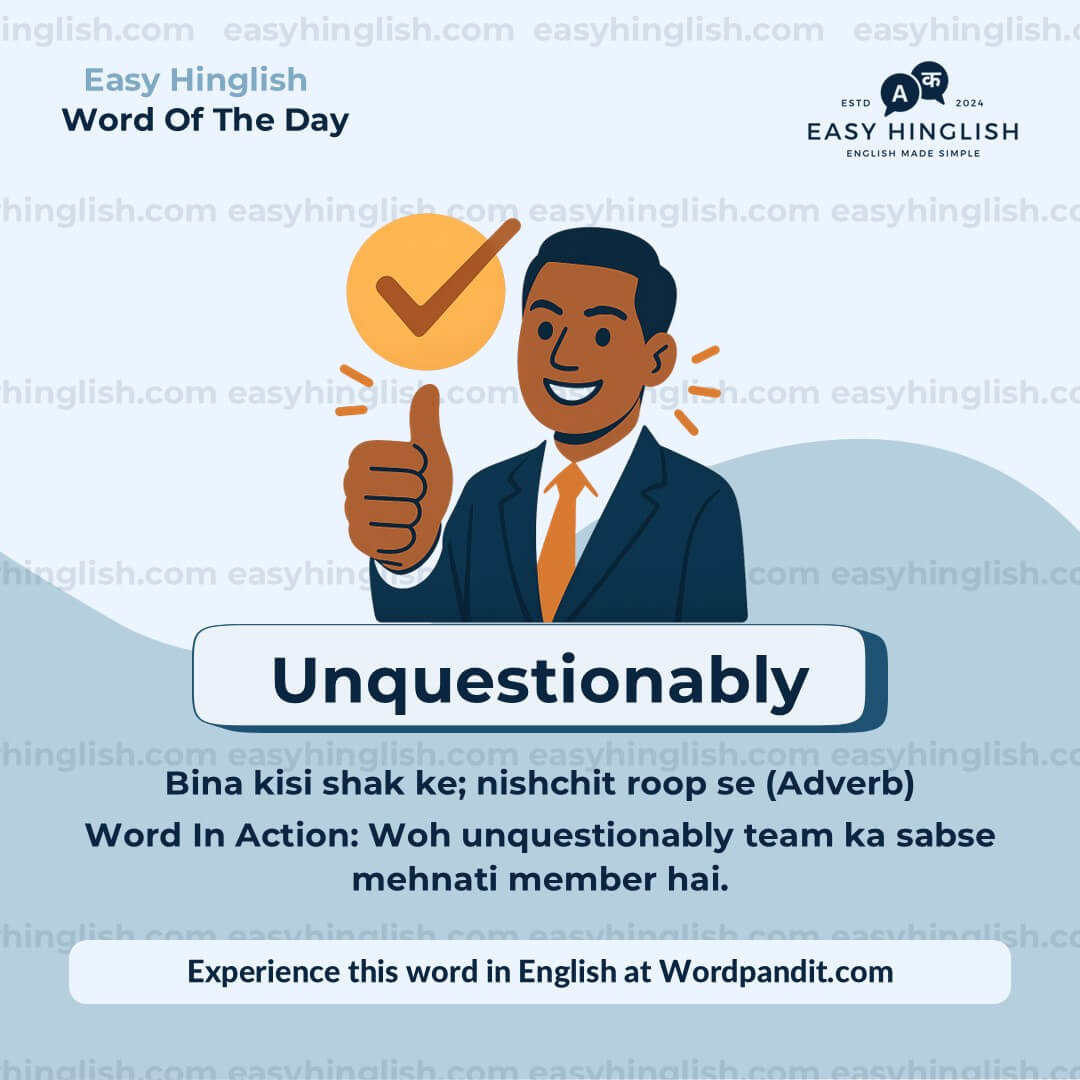
WORD-5: Unquestionably
Sandarbh (Context):
"This is unquestionably an opportunity for Gavin Newsom," said Darry Sragow, a long-time California Democratic strategist. - BBC
Vyakhya (Explanatory Paragraph):
“Unquestionably” ek adverb hai jo kisi baat ko strongly confirm karne ke liye use hota hai — matlab “bina kisi shak ke,” “pakka.” Jab aap kisi statement mein doubt hata kar usse confident banate ho, tab yeh word use hota hai. Upar wale sentence mein yeh dikhaya gaya hai ki Gavin Newsom ke liye yeh situation ek clear aur certain opportunity hai — jisme koi confusion nahi hai.
Arth (Meaning): Bina kisi shak ke; nishchit roop se (Adverb)
Uccharan (Pronunciation): un-KWES-chun-uh-blee
Kathinai Star (Difficulty Level): ⭐⭐ Basic to Intermediate
Utpatti (Etymology): “Question” + “-able” + “-ly” — jiska literal matlab hai “aise tareeke se jo question nahi kiya ja sakta.”
Prashant Sir Ke Tathya (Prashant Sir's Notes):
Yeh word tab use karo jab tum apne statement mein 100% sure ho. Yeh ek rhetorical punch deta hai — jaise tumhara sentence pe "certainty ka stamp" lag gaya ho. Lekin dhyan rahe, sirf tabhi use karo jab aap truly sure ho ki koi shak ki gunjaish nahi hai!
Samanarthi & Vipritarthi (Synonyms & Antonyms):
Samanarthi (Synonyms): certainly, definitely, undeniably, without doubt, absolutely
Vipritarthi (Antonyms): doubtfully, uncertainly, debatably, arguably
Udaharan (Usage Examples):
- Woh unquestionably league ki sabse talented player hai.
- Uske actions ne unquestionably logon ki jaan bachayi.
- Yeh film unquestionably modern cinema ka ek masterpiece hai.
- Unquestionably, education nation ke development ki key hai.
Sanskritik Sandarbh (Cultural Reference):
"Unquestionably, Martin Luther King Jr. ne American history ka direction badla." - Civil rights literature mein commonly quoted phrase
Sochiye (Think About It):
Kya aapko lagta hai ki “unquestionably” jaise shabdon ka use media ya politics mein logon ki soch ko influence karta hai?
Chhoti Kriya (Quick Activity):
Is sentence ko “unquestionably” ke saath dubara likhiye: “There is no doubt that she is the best candidate for the role.” → Your version: ___________________________
Yaad Karne Ka Tarika (Memory Tip):
Break karo: “Un” (not) + “question” + “ably” — yaani aisi baat jo question hi nahi ki ja sakti!
Vastavik Jeevan Me Upyog (Real-World Application):
“Unquestionably” ka use essays, political debates, speeches, ya motivational articles mein hota hai — jab kisi baat ko full confidence ke saath kehna ho.


