
Daily Vocabulary International Newspapers aur Publications se Seekho
Wordpandit ke Global Vocabulary Hub ke Saath Apni Vocabulary Expand Karo
Wordpandit par, hum aapko ek truly global vocabulary develop karne me madad karte hain, jo duniya ke sabse respected international publications se li gayi hoti hai. Yeh section aapko naye words se introduce karne ke liye design kiya gaya hai jo global conversations aur trends ko define karte hain.
Global Sources ka Power
Aapko globally sochne aur communicate karne me madad dene ke liye, hum vocabulary curate karte hain world ke top international sources se, jaise:
- The New York Times
- The Washington Post
- BBC
- The Guardian
- The Economist
- Scientific American
- Psychology Today
- Aur bhi bahut saare...
Globally Socho, Competitively Seekho
Hamare daily updates se aap international publications ke naye words seekhoge jo global news aur developments se jude hote hain. Isse aapki vocabulary current bhi rahegi aur globally relevant bhi.
Apni Global Soch Ko Expand Karo
Agar aap international exams ki tayari kar rahe ho, global business communication me excel karna chahte ho, ya sirf apni language skills improve karna chahte ho, toh Wordpandit aapko global level pe grow karne ke liye best resources provide karta hai.
Smart Learning, Global Reach
Hamari learning methodology me global examples, memory aids, aur interactive activities shamil hain, jo naye words ko effectively yaad karne aur real-world me use karne me madad karti hain.
Aaj Hi Apni Global Vocabulary Journey Shuru Karo!

Wordpandit Kyun Choose Karein?
Practical Learning: Aise words seekho jo real-world reading aur communication me aapko sach me kaam aayenge, taaki aapki comprehension aur bolne ki skills improve ho.
Diverse Content: Current affairs se lekar scientific breakthroughs tak, hamare different sources aapko multiple domains ki vocabulary seekhne ka moka dete hain.
Effortless Integration: Wordpandit ko apni daily routine ka part banao. Sirf kuch minute har din dene se aapki vocabulary time ke saath kaafi improve ho sakti hai.
Vocabulary Mastery Tak Ka Aapka Safar
- Regularly hamare Daily Vocabulary section ko visit karo
- Naye words explore karo aur unka context me use samjho
- In words ko apni writing aur bolne ki practice me use karne ki koshish karo
- Jaise-jaise aapke words badhte hain, apni progress ko track karo
Aaj Hi Apni Vocabulary Journey Shuru Karo!
Wordpandit ke saath vocabulary improve karna start karo. Roz thoda effort dalne se aap ek strong vocabulary develop kar sakte ho jo academic, professional, aur personal life me kaafi kaam aayegi.
Yaad rakho, ek naya shabd roz seekhna linguistic limitations ko door karne ka best tareeka hai! Wordpandit ko apni daily learning journey ka sathi banao aur vocabulary excellence ki taraf badho!
WORD-1: Divested
Sandarbh (Context):
"Philosophy of mind divested itself of its obsession with our ordinary thought and talk about the mind, and instead took its inspiration from science – in particular, neuroscience." - Aeon
Vyakhya (Explanatory Paragraph):
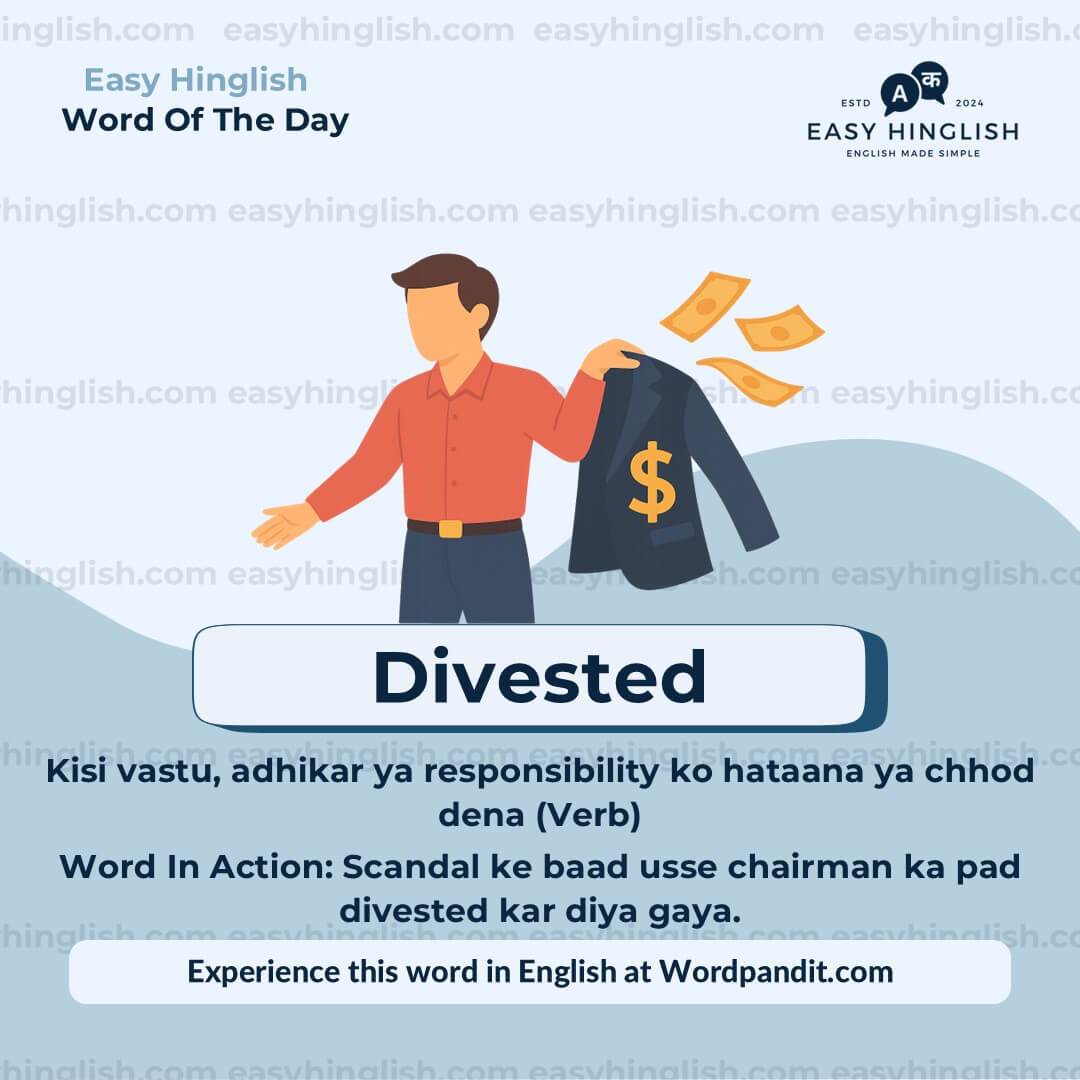
"Divested" ka matlab hota hai kisi cheez ko hata dena ya alag kar dena — chahe woh physical ho (jaise property) ya abstract ho (jaise belief). Is sentence mein, philosophy of mind ne purane vicharon ko chhodkar science aur neuroscience se prerna lena shuru kiya. Yani, usne apni purani soch se khud ko "divest" kiya, yaani alag kiya.
Arth (Meaning): Kisi vastu, adhikar ya responsibility ko hataana ya chhod dena (Verb)
Uccharan (Pronunciation): dih-VEST-ed
Kathinai Star (Difficulty Level): ⭐⭐⭐ Intermediate
Utpatti (Etymology): Latin se aaya hai 'divestire' — 'di-' (alag) + 'vestire' (kapda pehnana), matlab literally "kapda utaarna"
Prashant Sir Ke Tathya (Prashant Sir's Notes):
"Divest" ko "invest" ka opposite samjho. Jaise hum kisi cheez mein invest karte hain (money, time, attention), waise hi jab hum usse nikaalte hain, toh hum divest kar rahe hote hain. Business, politics aur personal habits mein yeh word commonly use hota hai.
Samanarthi & Vipritarthi (Synonyms & Antonyms):
Samanarthi (Synonyms): remove, strip, deprive, rid, relinquish, eliminate
Vipritarthi (Antonyms): invest, retain, keep, acquire, hold
Udaharan (Usage Examples):
- Company ne apna paisa fossil fuels se divest karke renewable energy mein lagaya.
- Woh dheere-dheere apni purani soch se divest ho gaya aur naye ideas ko accept kiya.
Sanskritik Sandarbh (Cultural Reference):
"Fossil fuel divestment movement 2010s mein kaafi popular hua, jisme universities aur governments ne coal, oil aur gas industries se apne investments hata liye." - Climate Policy Review
Sochiye (Think About It):
Kaunse purane beliefs ya societal assumptions hain jinse humein divest karna chahiye taaki hum aage badh sakein?
Chhoti Kriya (Quick Activity):
Tin cheezein likhiye—beliefs, habits ya possessions—jinko aap apni life se divest karna chahenge. Sochiye kyun?
Yaad Karne Ka Tarika (Memory Tip):
Sochiye: "di-VEST" — jaise vest utaar rahe ho — to *divest* is to remove something.
Vastavik Jeevan Me Upyog (Real-World Application):
Real life mein, log unethical industries se divest karte hain ya khud ke habits jaise social media addiction se. Companies bhi strategy badalne ke liye kisi sector se apna paisa nikaal sakti hain.
WORD-2: Obituary
Sandarbh (Context):
"In the words of The Guardian’s obituary this April, Dennett ‘helped shift Anglo-American philosophy from its focus on language and concepts towards a coalition with science.’" - Aeon
Vyakhya (Explanatory Paragraph):
"Obituary" ek aisa lekh ya notice hota hai jo kisi vyakti ke nidhan ke baad publish kiya jaata hai. Ismein aksar us vyakti ki life story, unke achievements aur unka samaj par kya prabhav tha — yeh sab share kiya jaata hai. Newspapers, websites ya journals mein obituary likhne ka maksad hota hai unki life ko respect aur samman ke saath yaad karna. Upar ke sentence mein, The Guardian ne Daniel Dennett ke liye ek obituary likhi jismein unke intellectual contribution ko highlight kiya gaya.
Arth (Meaning): Ek vyakti ke nidhan ki suchna jo uski life aur achievements ko summarize karti hai (Noun)
Uccharan (Pronunciation): uh-BICH-oo-air-ee
Kathinai Star (Difficulty Level): ⭐⭐ Basic
Utpatti (Etymology): Latin ke 'obitus' (death) aur 'obire' (to go toward, to die) se nikla hai
Prashant Sir Ke Tathya (Prashant Sir's Notes):
Yeh un shabdon mein se hai jo news aur magazines mein baar-baar dikhai deta hai jab koi prasiddh vyakti guzar jaata hai. Obituary sirf death notice nahi hoti — yeh us vyakti ke jeevan ko samman aur shraddhanjali ke roop mein yaad karti hai.
Samanarthi & Vipritarthi (Synonyms & Antonyms):
Samanarthi (Synonyms): death notice, memorial article, tribute, eulogy
Vipritarthi (Antonyms): birth announcement, biography, celebration of life
Udaharan (Usage Examples):
- Newspaper ne ek heartfelt obituary publish ki jo scientist ke kaam ko yaad karti hai.
- Usne apne purane professor ki obituary weekend edition mein dekhi aur hairaan reh gayi.
Sanskritik Sandarbh (Cultural Reference):
"The New York Times ki obituaries literary aur detailed hoti hain, jo famous logon ke jeevan ki kahani ko capture karti hain." - NYT Features
Sochiye (Think About It):
Agar aaj aapki obituary likhi jaaye, toh aap kya chahenge ki usme aapke jeevan ke baare mein likha ho?
Chhoti Kriya (Quick Activity):
Kisi recent celebrity ya leader ki obituary search karke usme se 3 important cheezein likhiye jo unki life ko memorable banati hain.
Yaad Karne Ka Tarika (Memory Tip):
Sochein: “obituary” = “object + burial” — ek likhit object jo kisi ki burial (death) ko mark karta hai.
Vastavik Jeevan Me Upyog (Real-World Application):
Journalism aur history mein obituary ek important role play karta hai. Yeh sirf yaad nahi dilata, balki ek society ke nazariye ko bhi reflect karta hai — kin logon ko hum yaad rakhte hain aur kyun.
WORD-3: Neologisms
Sandarbh (Context):
"The prime mover behind The Philosophical Lexicon (9th ed, 2008), a dictionary of satirical neologisms based on the names of influential philosophers." - Aeon
Vyakhya (Explanatory Paragraph):
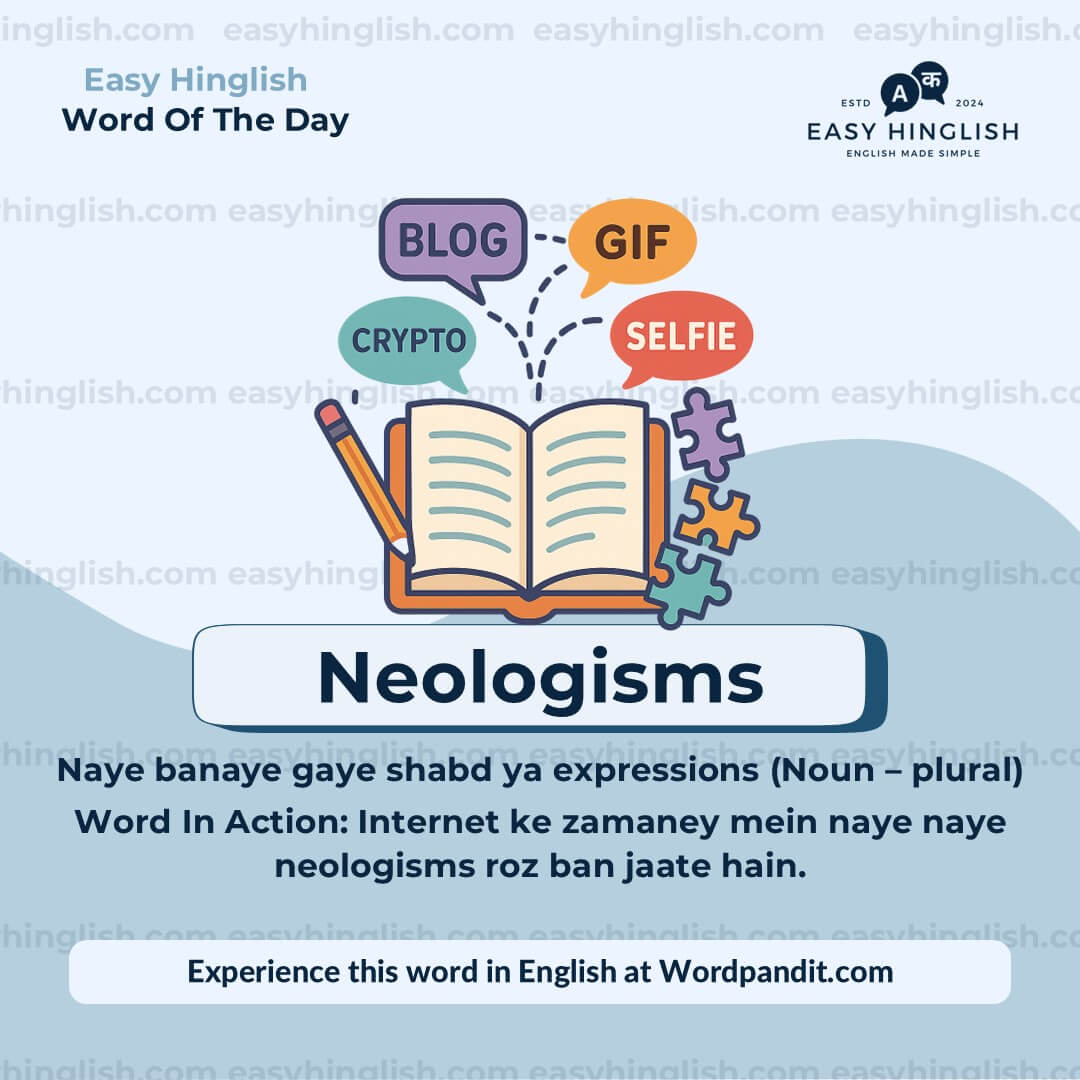
"Neologisms" ka matlab hota hai naye banaye gaye shabd ya expressions. Jab naye trends, technology, ya cultural changes aate hain, tab unko express karne ke liye naye shabd bante hain—yehi neologisms hote hain. Upar diye gaye example mein, *The Philosophical Lexicon* ek dictionary hai jisme mazaak bhare naye shabd diye gaye hain jo famous philosophers ke naamon par based hain.
Arth (Meaning): Naye banaye gaye shabd ya expressions (Noun – plural)
Uccharan (Pronunciation): NEE-oh-loh-jiz-uhmz
Kathinai Star (Difficulty Level): ⭐⭐⭐ Intermediate
Utpatti (Etymology): French ‘néologisme’ se, jiska base hai Greek: ‘neo’ (naya) + ‘logos’ (shabd ya speech)
Prashant Sir Ke Tathya (Prashant Sir's Notes):
Neologisms ko samajhna ek tarah ka linguistic exploration hai. Jab bhi society ya science badalti hai, naye shabdon ki zarurat padti hai. Yeh naye shabd kabhi mazedaar hote hain, kabhi technical—aur kuch toh itne popular ho jaate hain ki dictionary ka part ban jaate hain!
Samanarthi & Vipritarthi (Synonyms & Antonyms):
Samanarthi (Synonyms): coinages, new terms, invented words, portmanteaus
Vipritarthi (Antonyms): archaic words, outdated terms, clichés, traditional expressions
Udaharan (Usage Examples):
- Technology ne humein "selfie" aur "google" jaise neologisms diye hain.
- Shakespeare ne kai neologisms create kiye jo aaj ke English mein commonly use hote hain.
Sanskritik Sandarbh (Cultural Reference):
"'Bromance' — 'brother' aur 'romance' ka fusion — ek aisa neologism hai jo pop culture mein bahut famous ho gaya." - Urban Dictionary Chronicles
Sochiye (Think About It):
Neologisms sirf naye shabd nahi hote—kya yeh human thought ki evolution ko reflect karte hain? Kya yeh humein naye nazariye se duniya dekhne mein madad karte hain?
Chhoti Kriya (Quick Activity):
Do shabdon ko milaakar apna ek khud ka neologism banaiye. Uska arth likhiye aur ek sentence mein use karke batayein!
Yaad Karne Ka Tarika (Memory Tip):
Break kijiye: "Neo" = new, "logism" = word — matlab *neologism* hota hai ek "naya shabd."
Vastavik Jeevan Me Upyog (Real-World Application):
Technology, social media aur marketing jaise fields mein neologisms kaafi zaroori hote hain — naye product, trend ya behavior ko describe karne ke liye naye shabdon ki zarurat hoti hai.
WORD-4: Perceptual
Sandarbh (Context):
"Much of what we do. And it assumes that we are subjects of consciousness – creatures who undergo perceptual, emotional and bodily experiences." - BBC
Vyakhya (Explanatory Paragraph):
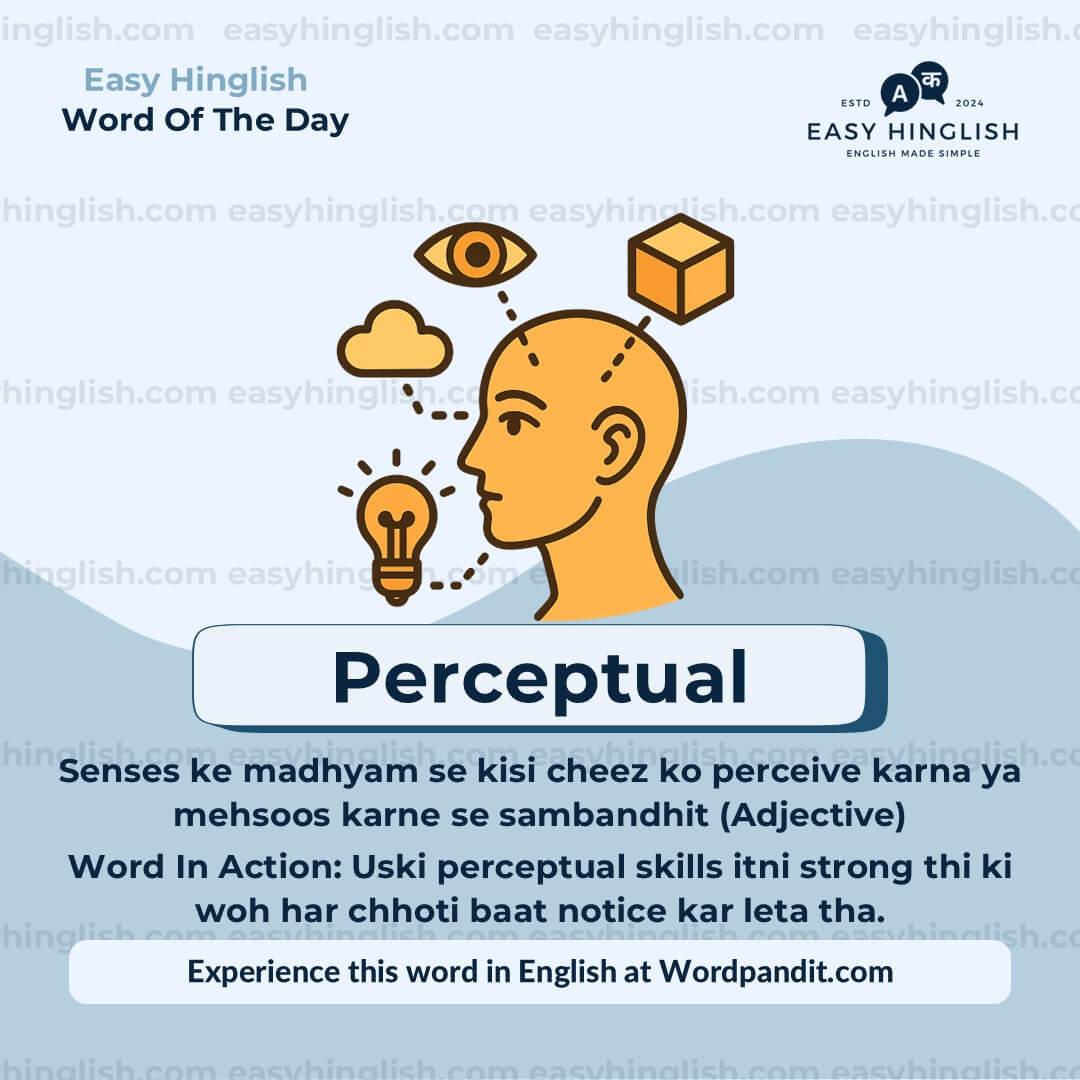
"Perceptual" ka matlab hai aise experiences ya cheezen jo hum apni senses ke through mehsoos karte hain—jaise dekhna, sunna, mehsoos karna, etc. Yeh word yeh batata hai ki hum duniya ko sirf soch (thought) ke zariye nahi, balki apne anubhavon ke zariye bhi samajhte hain. Is sentence mein, perceptual ka matlab hai woh sensory experiences jo hum har roz naturally experience karte hain.
Arth (Meaning): Senses ke madhyam se kisi cheez ko perceive karna ya mehsoos karne se sambandhit (Adjective)
Uccharan (Pronunciation): per-SEP-choo-uhl
Kathinai Star (Difficulty Level): ⭐⭐⭐ Intermediate
Utpatti (Etymology): Latin se ‘percipere’ (samajhna ya grahan karna) + ‘-al’ (adjective banane ke liye)
Prashant Sir Ke Tathya (Prashant Sir's Notes):
"Perceptual" ka link humare senses se hota hai—jo kuch bhi hum dekhte, sunte, ya chhoote hain. Yeh "conceptual" se alag hai, jo ideas se related hota hai. Psychology mein "perceptual abilities" jaise depth perception aur color recognition kaafi important hote hain.
Samanarthi & Vipritarthi (Synonyms & Antonyms):
Samanarthi (Synonyms): sensory, observational, experiential, cognitive (kuch contexts mein)
Vipritarthi (Antonyms): imperceptible, unnoticeable, oblivious
Udaharan (Usage Examples):
- Bachche khel ke madhyam se apni perceptual skills ko develop karte hain.
- Artists apni perceptual awareness se chhoti chhoti details capture karte hain.
Sanskritik Sandarbh (Cultural Reference):
"Psychologist James Gibson ke experiments ne perceptual systems ko samajhne ka nazariya badal diya, jahan unhone environment ke saath direct interaction par zor diya." - Psychology Today
Sochiye (Think About It):
Kya do log ek hi ghatna ko bilkul alag tareeke se dekh sakte hain, unke perceptual filters ki wajah se?
Chhoti Kriya (Quick Activity):
Ek simple object (jaise ek cup) ko 30 seconds tak dhyan se dekhiye. Ab uski color, texture, sound jab tap karte hain—sab likhiye. Isse aapki perceptual attention improve hoti hai.
Yaad Karne Ka Tarika (Memory Tip):
"Perceptual" = "Perceive" se bana hai — yaani jo kuch bhi aap senses se perceive karte ho, woh perceptual hota hai.
Vastavik Jeevan Me Upyog (Real-World Application):
Design, sports, aviation, aur surgery jaise professions mein perceptual skills bahut zaroori hote hain, jahan decisions jaldi aur accurately lene padte hain sensory information ke basis par.
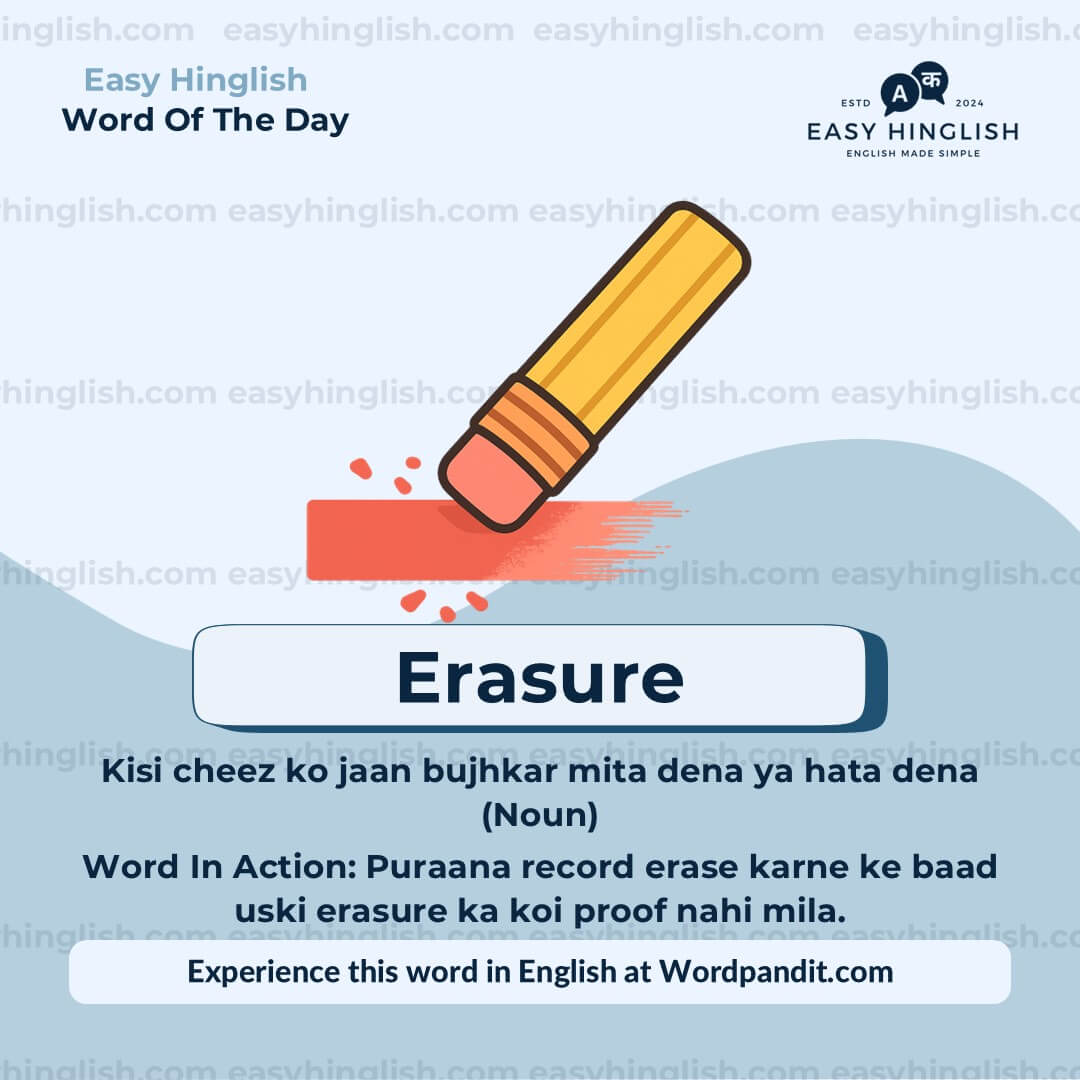
WORD-5: Erasure
Sandarbh (Context):
"In its most extreme form, this erasure manifested as a claim of terra nullius – or nobody’s land – where the coloniser claimed that the Indigenous population lacked any form of political organisation or system of land rights at all." - Aeon
Vyakhya (Explanatory Paragraph):
"Erasure" ka matlab hai kisi cheez ko mita dena ya hata dena — chahe physically, ideologically ya historically. Is sentence mein yeh word un unjust colonial acts ko describe karta hai jisme Indigenous logon ke culture, identity aur land rights ko puri tarah se ignore kar diya gaya. "Terra nullius" ka claim karna ek political erasure tha jisme bataya gaya ki woh zameen kisi ki thi hi nahi.
Arth (Meaning): Kisi cheez ko jaan bujhkar mita dena ya hata dena (Noun)
Uccharan (Pronunciation): ih-RAY-sher
Kathinai Star (Difficulty Level): ⭐⭐⭐ Intermediate
Utpatti (Etymology): Latin se aaya hai 'erasura' (scraping out) jo 'eradere' se bana hai, matlab "erase karna"
Prashant Sir Ke Tathya (Prashant Sir's Notes):
Erasure sirf cheezon ko physical roop se mitane ka kaam nahi karta — yeh identity, yaadash aur visibility ko bhi khatam kar sakta hai. History mein jab marginalized communities ke contributions ko ignore kiya jata hai, toh use historical erasure kehte hain. Cultural studies, gender studies aur postcolonial thought mein yeh ek critical concept hai.
Samanarthi & Vipritarthi (Synonyms & Antonyms):
Samanarthi (Synonyms): deletion, obliteration, removal, suppression, elimination
Vipritarthi (Antonyms): preservation, inclusion, recognition, remembrance
Udaharan (Usage Examples):
- Museum ne Indigenous awaazon ke erasure ko highlight karte hue ek powerful exhibit banaya.
- Colonization ke doraan hone wale cultural erasure ko ab reverse karne ki koshish ki ja rahi hai.
Sanskritik Sandarbh (Cultural Reference):
"Literature aur activism mein 'erasure' ka use aksar un communities ke silencing ko batane ke liye hota hai jo systemically ignore ki gayi hain. Claudia Rankine ki *Citizen* jaisi works is psychological aur social impact ko explore karti hain." - The Atlantic
Sochiye (Think About It):
Kya aapke community ya country mein koi aise historical ya cultural figures hain jinhe erase kar diya gaya ho? Unka recognition kaise kiya jaa sakta hai?
Chhoti Kriya (Quick Activity):
Kisi aise historical figure ya group ko chuniye jinka naam aaj ki mainstream history mein kam suna gaya ho. Unka ek major contribution likhiye aur unhe dubara yaad dilane ka ek tareeka sochiye.
Yaad Karne Ka Tarika (Memory Tip):
Sochiye: “Erasure” = “Erase” se aaya hai. Jab kuch erase hota hai, toh woh gaayab ho jata hai — kabhi-kabhi jaan bujhkar bhi.
Vastavik Jeevan Me Upyog (Real-World Application):
Education, journalism aur activism mein "erasure" ek important concept hai. Isse hum samajh sakte hain ki kin kahaniyon ko highlight kiya gaya hai aur kin logon ko bhool diya gaya hai — aur is injustice ko kaise sudhara jaa sakta hai.